
Quick answer: Some dental insurance plans cover part of a dental implant, often around half of the cost up to a yearly limit, while others exclude implants and pay only what a bridge or denture would cost. Medicare generally doesn't cover implants. The only way to know your number is a benefits check against your actual treatment plan.
You've just been told you need a dental implant. Before you've even absorbed what that means, your next thought is the card in your wallet.
You call the number on the back. Someone reads you percentages, a deductible and a "plan maximum." You hang up knowing less than when you started.
Then a friend says her insurance "paid for most of her implant," and another says his paid nothing. Both of them are telling the truth.
The simple answer is… many dental plans pay something toward an implant, and the dental office can usually find out how much before you commit.
The more honest answer is… dental insurance works more like a yearly allowance than full coverage. Even a plan that covers implants usually has a yearly dollar cap that's far smaller than the cost of an implant, plus rules about which parts it pays for and when.
Knowing those rules up front is what keeps a treatment plan from becoming a surprise bill.
Does Dental Insurance Cover Dental Implants?
It depends entirely on the plan. Two real California plans, both administered by the same insurer, show how wide the range is.
One college district's plan states plainly that implants are not covered. Instead, it pays toward an implant only the amount it would have paid for a standard partial or full denture (Pasadena Area Community College, 2017).
Another lists implants as a covered category with its own yearly implant limit of $2,000 with an in-network dentist (West Valley-Mission Community College District, 2025).
Same insurer, same state, completely different answers. That's why we never guess from the name on the card.
Cost is the biggest reason people delay dental care. A national survey found more people reported cost barriers to dental care than to any other type of health care, at every age and income level (Vujicic et al., 2016).

What Parts of a Dental Implant Does Insurance Cover?
An implant isn't billed as one item. It's a series of procedures, and your plan may treat each one differently.
- Exam and imaging, including X-rays and, for implants, a 3D scan
- Tooth extraction, if the tooth is still there
- Bone grafting or a sinus lift, if the jaw needs rebuilding first
- The implant post placed in the bone
- The abutment, the connector between implant and tooth
- The crown, bridge or denture on top
- Sedation, if you choose it
A plan might cover the extraction under "basic" services, the crown under "prosthodontics" at 50%, and the implant post not at all. The total you pay depends on how each line is treated.
| Type of coverage | What it usually means for implants | What to ask |
|---|---|---|
| Dental PPO | May cover part of the implant and crown, up to a yearly maximum; some plans exclude implants | Is there an implant category? What is the yearly maximum, and is there a separate implant limit? |
| Dental HMO | Care is limited to the plan's network and fee list | Is my implant dentist in network? (Our office does not accept HMO plans.) |
| Traditional Medicare | Dental care is excluded by law, with narrow medical exceptions | Does my medical situation fall into one of the exceptions? |
| Medicare Advantage | Most plans add a dental benefit, often with low yearly caps | What is the dental maximum? Is prior authorization required? |
| Medical insurance | Rarely pays for implants, but may for accidents or some medical conditions | Is there an accident benefit, and what's the time limit? |
| No insurance | Savings plans and financing replace insurance | What does a discount plan cover, and can it be combined with anything else? |
The Biggest Difference: Your Annual Maximum vs. the Cost of Your Treatment
This is the part most people miss. A plan can cover implants at a generous percentage and still pay a fraction of the bill.
That's because most dental plans have an annual maximum, the most it will pay in a calendar year. In the plans above, it was $2,500 a year with an in-network dentist ($2,200 out of network) in one case, and a separate $2,000 implant limit in the other (Pasadena Area Community College, 2017; West Valley-Mission Community College District, 2025).
Your percentage tells you how fast you'll reach the cap. The cap tells you how much help you'll actually get.
Researchers have noted that, in many cases, dental insurance functions "as a discount plan that offers a progressively smaller discount on more expensive services" (Simon et al., 2024). Implants are exactly the kind of expensive service where that shows.
One practical strategy is timing. When it's clinically safe, treatment can sometimes be split across two calendar years, for example the extraction and graft in one year and the implant crown in the next, so two annual maximums apply. Whether that's sensible depends on your healing, not just your benefits.
Why Does My Plan Say It Pays the "Least Expensive Alternative"?
Some plans, including one of those above, have an alternate-benefit rule. If there's a cheaper, "professionally acceptable" way to treat the problem, the plan pays its share of the cheaper option and you pay the difference (West Valley-Mission Community College District, 2025).
For a missing tooth, the cheaper alternative might be a bridge or a removable partial denture. So the plan may calculate its payment as if you were getting a bridge, even though you're getting an implant.
That doesn't mean you have to choose the bridge. It means the plan's contribution is capped at the bridge's allowance.
Does Medicare Cover Dental Implants?
Generally, no. Traditional Medicare is barred by law from covering routine dental care. Since 2023, and with additions in 2024, it covers a small set of dental services tied to specific medical treatment, such as before organ transplants, heart valve surgery or head and neck cancer treatment (Simon et al., 2024). Implants to replace missing teeth aren't part of that.
The gap is real. In one analysis, 74% of low-income Medicare beneficiaries had no dental care in the previous year (Willink et al., 2016).
Medicare Advantage plans often include dental benefits, but the details matter. In a 2025 study, enrollees in plans with yearly dental maximums up to $500 or with prior authorization reported more unmet dental needs than those with fewer restrictions (Nasseh et al., 2025).
Will Medical Insurance Pay for Dental Implants?
Usually not for ordinary tooth loss. There are exceptions worth asking about.
Some dental plans include a separate accident benefit. Both California plans above pay accident-related dental care at 100% up to $1,000 a year, and one requires the treatment to happen within 180 days of the accident (West Valley-Mission Community College District, 2025).
Tooth loss linked to an injury, cancer treatment or a congenital condition is sometimes reviewed under medical benefits. Coverage varies too much to promise, so this is something to raise early and in writing.
Waiting Periods, Replacement Rules and the "Missing Tooth" Question
Three kinds of rules catch people out:
- Replacement limits. Plans often won't pay to replace a crown, bridge or implant within a set number of years. In the plans above, implant-related replacements weren't covered for five years (Pasadena Area Community College, 2017; West Valley-Mission Community College District, 2025).
- Waiting periods. Some plans, especially individual ones, make you wait months before major services are covered. Both plans above listed none, which is common in employer plans but not universal.
- Missing tooth provisions. Some plans won't pay to replace a tooth that was already missing when your coverage started. Not every plan has this rule, so ask about it directly if your tooth was lost before you enrolled.
Some plans also require a pre-treatment estimate before they'll pay for implants at all. One of the plans above won't cover implants unless the dentist requests and receives this approval first (West Valley-Mission Community College District, 2025).
What We Look at Before Recommending a Treatment Plan
We plan treatment around your mouth first and your benefits second. But we look at both before you decide.
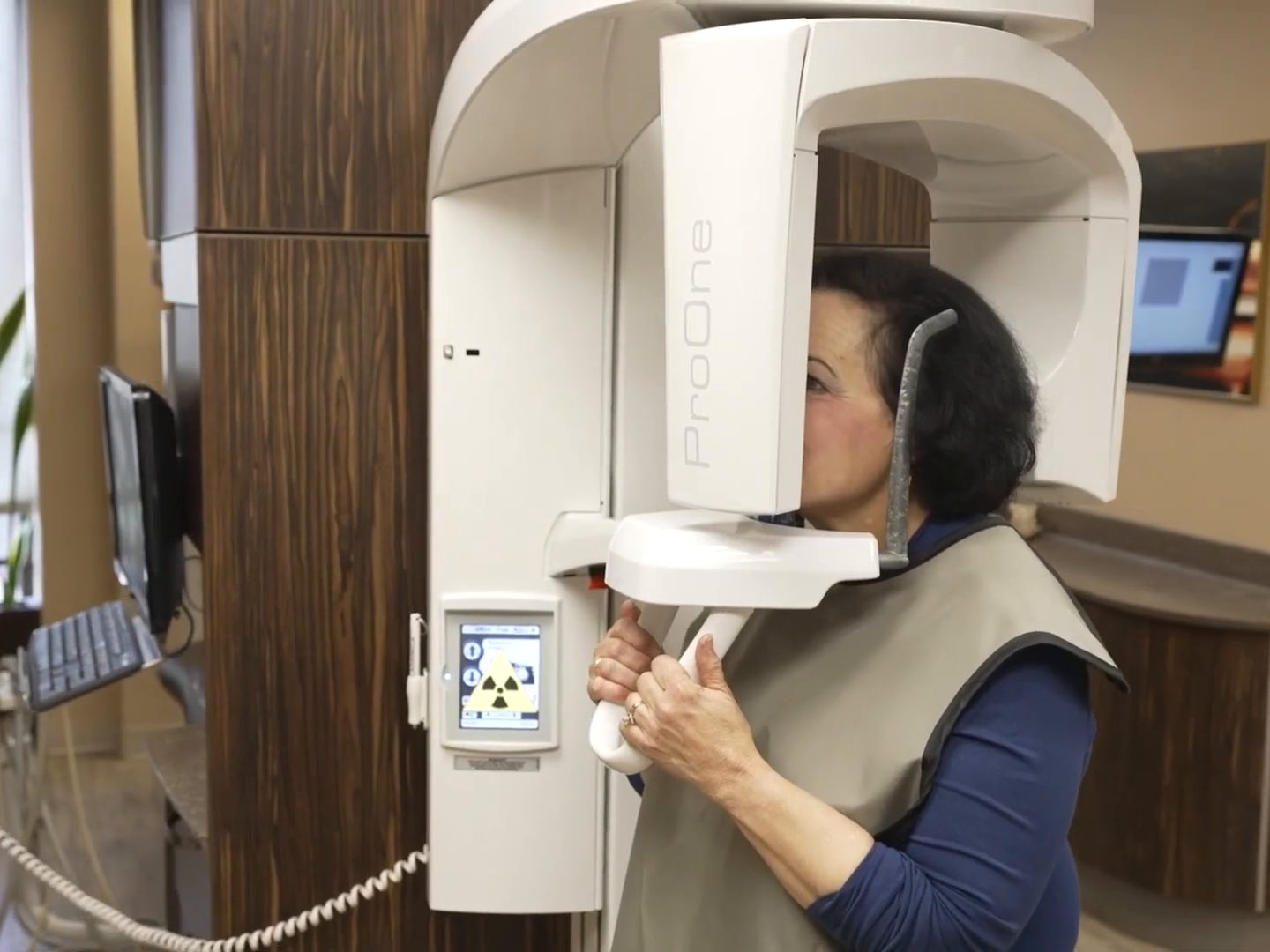
- Your 3D scan. Bone volume, sinus position and nerve paths decide whether you need grafting, which changes both the timeline and the bill. Every implant case here is planned on a cone-beam CT scan.
- How many teeth are involved. One implant, an implant bridge or a full arch fall under very different parts of a plan.
- Your benefits check. Our front desk checks your coverage before the consultation, including the yearly maximum, what's already been used and any implant clause.
- Timing. Whether staging across calendar years is safe and worthwhile for you.
- The full cost, not just the covered part. You'll get a written quote after the scan, with insurance and financing worked out.
Is an Implant Worth It If Insurance Pays More for a Bridge?
Insurance compares the price today. It's worth also comparing how long each option tends to last.
A systematic review of modern implants found about 96% were still in place after 10 years (Howe et al., 2019). For traditional tooth-supported bridges, a separate review estimated 89% survival at 10 years (Tan et al., 2004).
Economic studies comparing single implants with bridges have often found the implant to be the more cost-effective option over time, though not every study agrees (Beikler & Flemmig, 2015). In one, the implant crown came out ahead partly because of its lower laboratory costs compared with a bridge (Zitzmann et al., 2013).
A bridge also means shaping the healthy teeth on either side. An implant replaces the missing tooth on its own. Our page on dental implants explains the treatment step by step.
Risks and Limits to Keep in Mind
- An estimate isn't a guarantee. Final payment depends on your eligibility and remaining benefits when the claim is processed.
- Benefits reset every plan year. Unused maximum doesn't usually roll over.
- Implants still need upkeep. Even successful implant crowns can have screw loosening or porcelain chips over time (Jung et al., 2008). Ask how your plan handles repairs.
- The cheapest quote isn't always the cheapest outcome. Ask what's included: scan, graft, abutment, final crown and follow-up.
How Much Will I Pay Out of Pocket for a Dental Implant?
We don't publish a price list, because the cost depends on how many teeth, whether you need extractions or grafting, the materials and the sedation you choose. Our implant cost guide walks through those six factors.
For patients in Los Angeles and the Westside, here's how payment works at West LA Implants:
- We're in network with most PPO dental plans, including United, Concordia, Principal, GIHA, Emeritus and Guardian, and we file claims for you. We don't accept HMO plans.
- Without insurance, our in-house Dental Savings Plan offers discounts on listed services. It can't be combined with insurance or outside financing.
- Monthly payments are available through CareCredit, Proceed Finance, Alphaeon Credit, Cherry and Sunbit. See our insurance and financing page for details.
- Every implant we place carries a one-year warranty on materials.
Our earlier article on finding affordable dental implants has more on weighing price against long-term value.
Frequently Asked Questions
Can I use two dental insurance plans for one implant?
If you're covered by two plans, for example your own and a spouse's, the second plan may pay part of what the first doesn't. Coordination rules vary, so we check both before treatment.
Does dental insurance cover All-on-4 or implant-supported dentures?
Plans that cover implants may pay toward full-arch treatment, but the yearly maximum usually covers only a small share. Some plans pay the allowance for a standard denture toward the cost. Learn more about implant-supported dentures.
I just changed jobs. Should I wait for my new insurance before starting?
Possibly. Check whether the new plan has waiting periods or a missing tooth rule first. Sometimes starting the extraction or graft under one plan and finishing under the next makes sense.
Can I use HSA or FSA money for a dental implant?
Many people use pre-tax health account funds for dental treatment. Rules depend on your account type and administrator, so confirm with them before paying.
Will insurance pay to replace an old bridge with an implant?
Often only if the old bridge is past the plan's replacement period, which is commonly several years. Your benefits check will show the date of the last covered replacement.
Is a pre-treatment estimate the same as approval?
Not exactly. It shows what the plan expects to pay based on current information, but the final amount depends on your benefits when the claim is processed.
Final Takeaways
- Dental insurance may cover part of an implant, cover only a cheaper alternative, or exclude implants entirely.
- The yearly maximum (between $2,000 and $2,500 in the plans we reviewed) usually limits your benefit more than the percentage does.
- Look for alternate-benefit, replacement, waiting-period and missing-tooth rules in your plan booklet.
- Traditional Medicare generally doesn't cover dental implants. Medicare Advantage dental benefits vary widely.
- Staging treatment across calendar years can sometimes use two annual maximums.
- A benefits check against your actual treatment plan is the only reliable answer.
Let Us Check Your Benefits Before You Decide
Call (310) 692-9316 to book a consultation, and have your insurance card handy. Our front desk will check your benefits before you come in.
At the consultation you'll get a 3D scan, an honest read and a written quote with your insurance and financing worked out. You can also request a consultation online.
If a crown is giving you trouble right now, read what to do first when a crown comes loose.
Research References
- Pasadena Area Community College. Delta Dental PPO Incentive Plan: Combined Evidence of Coverage and Disclosure Form (Group 07046). Effective October 1, 2017. https://www.pasadena.edu/hr/docs/benefits/Delta_Dental_PPO_07046.pdf
- West Valley-Mission Community College District. Delta Dental PPO: Combined Evidence of Coverage and Disclosure Form. Effective January 1, 2025. https://wvm.edu/forms-documents/human-resources/benefits/full-time-employees/dental/Delta-PPO-Evidence-of-Coverage-2025.pdf
- Vujicic M, Buchmueller T, Klein R. Dental care presents the highest level of financial barriers, compared to other types of health care services. Health Aff (Millwood). 2016;35(12):2176-2182. doi:10.1377/hlthaff.2016.0800. https://pubmed.ncbi.nlm.nih.gov/27920304/
- Simon L, Song Z, Barnett ML. The new Medicare dental benefit: small but mighty. JAMA Intern Med. 2024;184(12):1407-1408. doi:10.1001/jamainternmed.2024.4802. https://pubmed.ncbi.nlm.nih.gov/39432271/
- Willink A, Schoen C, Davis K. Dental care and Medicare beneficiaries: access gaps, cost burdens, and policy options. Health Aff (Millwood). 2016;35(12):2241-2248. doi:10.1377/hlthaff.2016.0829. https://pubmed.ncbi.nlm.nih.gov/27920312/
- Nasseh K, Singhal A, Vujicic M, Simon L. Benefit design and access to dental care among seniors with Medicare Advantage dental benefits. JAMA Health Forum. 2025;6(1):e245123. doi:10.1001/jamahealthforum.2024.5123. https://pubmed.ncbi.nlm.nih.gov/39854003/
- Howe MS, Keys W, Richards D. Long-term (10-year) dental implant survival: a systematic review and sensitivity meta-analysis. J Dent. 2019;84:9-21. doi:10.1016/j.jdent.2019.03.008. https://pubmed.ncbi.nlm.nih.gov/30904559/
- Tan K, Pjetursson BE, Lang NP, Chan ES. A systematic review of the survival and complication rates of fixed partial dentures (FPDs) after an observation period of at least 5 years. Clin Oral Implants Res. 2004;15(6):654-666. doi:10.1111/j.1600-0501.2004.01119.x. https://pubmed.ncbi.nlm.nih.gov/15533126/
- Beikler T, Flemmig TF. EAO consensus conference: economic evaluation of implant-supported prostheses. Clin Oral Implants Res. 2015;26 Suppl 11:57-63. doi:10.1111/clr.12630. https://pubmed.ncbi.nlm.nih.gov/26077930/
- Zitzmann NU, Krastl G, Weiger R, Kühl S, Sendi P. Cost-effectiveness of anterior implants versus fixed dental prostheses. J Dent Res. 2013;92(12 Suppl):183S-188S. doi:10.1177/0022034513504927. https://pubmed.ncbi.nlm.nih.gov/24158338/
- Jung RE, Pjetursson BE, Glauser R, Zembic A, Zwahlen M, Lang NP. A systematic review of the 5-year survival and complication rates of implant-supported single crowns. Clin Oral Implants Res. 2008;19(2):119-130. doi:10.1111/j.1600-0501.2007.01453.x. https://pubmed.ncbi.nlm.nih.gov/18067597/